
Gantry Steelwork
The installation of gantry steelwork – the massive, heavy-duty structural beams that form the runways for overhead traveling cranes – is one of the most critical and technically demanding tasks in industrial construction. These systems offer unparalleled advantages in terms of precision, stability, and logistics compared to conventional mobile cranes.
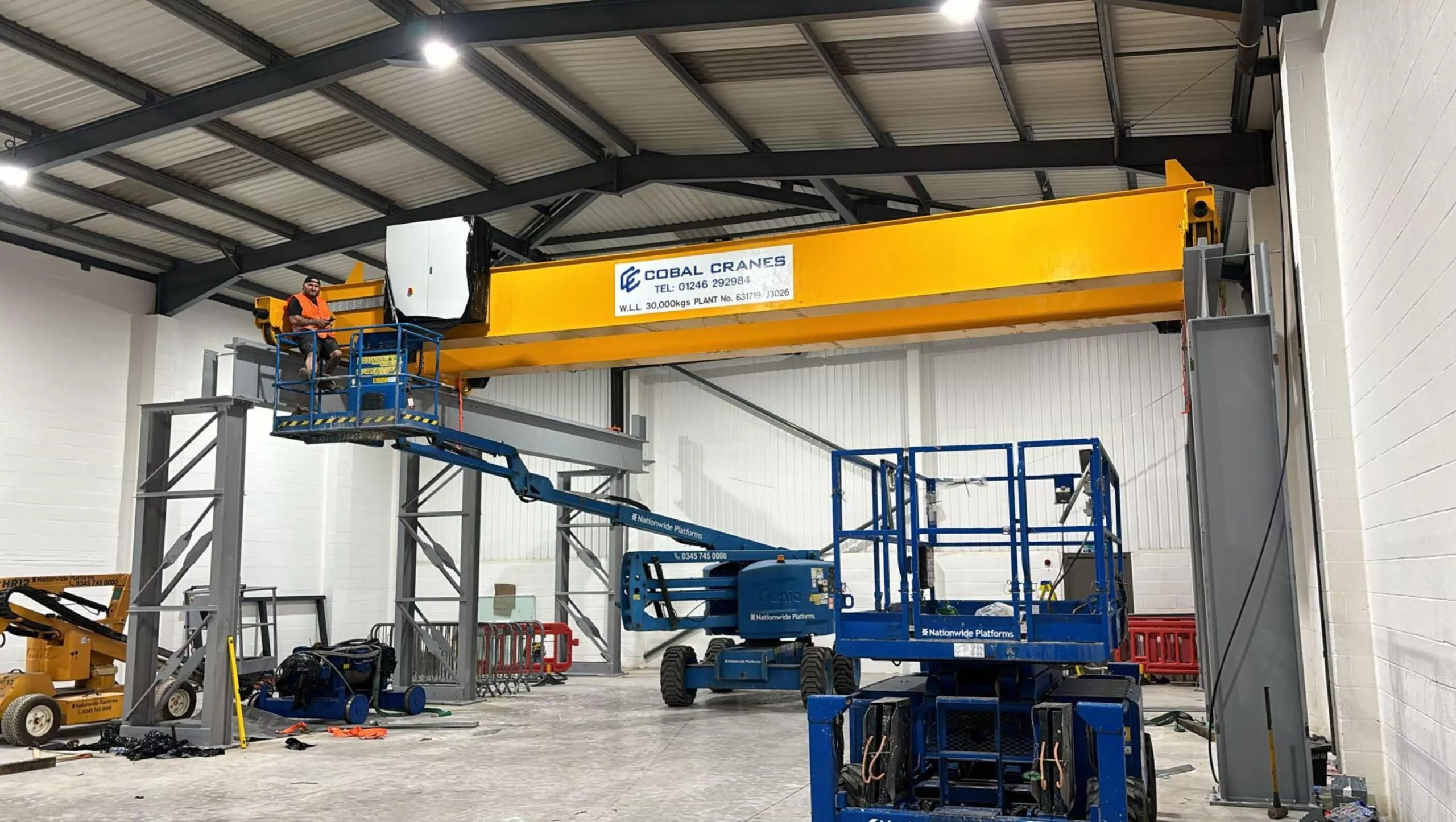
Gantry Steelwork & Crane Runways for Warehouses
The primary reason these gantry lifting systems are preferred is the millimetre-level precision and modularity they offer. Gantry steelwork must be perfectly aligned to ensure the safe and smooth operation of the finished overhead crane system. Even a slight misalignment in a beam or rail can cause excessive wear, vibration, and catastrophic failure of the main crane.
Modular hydraulic gantry systems are designed specifically for heavy lifting in complex or confined spaces, often capable of expanding their lifting capacity and manoeuvring loads with highly synchronised, automated controls. This precision allows construction teams to “stitch” together huge, heavy components on the job site, ensuring that the critical rail surfaces are positioned exactly according to engineering specifications.
Furthermore, stability and load management are crucial for safety. Unlike a mobile crane, which must be perfectly levelled and counterweighted on a possibly uneven job site, a dedicated gantry lifting system spreads its load through its own robust legs and ground-level tracks.
This structural stability provides a much safer platform for lifting and holding enormous loads of structural steel, which can weigh hundreds of tons, in a suspended position for hours or even days while welding and bolting connections are finalised. This ground-supported approach minimises dynamic forces and reduces the risk of overturning, making the entire installation process inherently safer and more reliable.


What's the difference between gantry steelwork and a gantry crane?
Gantry steelwork is the support structure built into or alongside a building. A gantry crane (or portal crane) is a type of crane that runs on rails often placed directly on the floor or ground, and its supporting structure (legs and beam) moves with it. Gantry steelwork, on the other hand, is a fixed structure for a travelling overhead crane.
What determines the size and capacity of gantry steelwork?
The size and specifications (like beam size and column spacing) are determined by:
- The Safe Working Load (SWL) of the crane.
- The span and travel length of the crane.
- The forces applied, including the crane’s weight, the maximum load, and dynamic forces from braking and acceleration.
- Relevant design standards and codes (e.g., British Standards, Eurocodes, or relevant regional codes).