
A-Frame Gantry Crane
Our A-frame gantry crane, also known as a portal crane, is a type of crane built atop a gantry, which is a structure used to straddle an object or workspace. They are distinguished from overhead or bridge cranes, which are usually fixed to the walls or ceiling of a building, because gantry cranes are supported by legs and often run on rails installed on the ground or a specific track. This design allows them to be used outdoors in yards, construction sites, and ports, or indoors where existing building structures cannot support a traditional overhead crane.
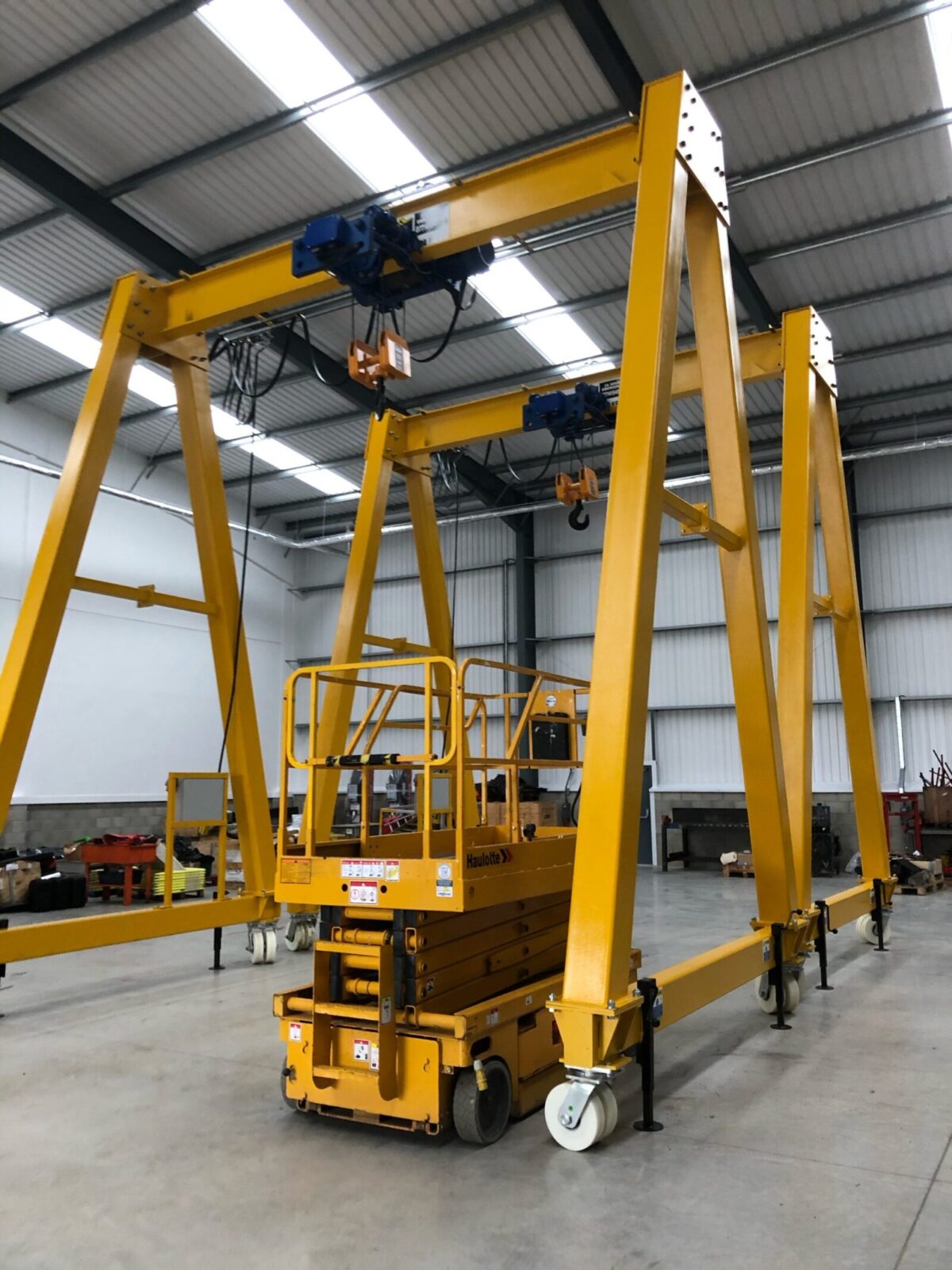
Portable A-Frame Gantry Crane
A portable A-frame gantry crane, often referred to as a portable gantry crane or mobile gantry, is a highly versatile and cost-effective lifting solution characterised by its ‘A’ shape when viewed from the side. Unlike fixed overhead cranes, this structure is designed for mobility, featuring two upright supports (the ‘A’ frames) connected by a horizontal main beam (the runway) from which a hoist and trolley can suspend a load. The supports are typically mounted on swivel casters or wheels, often with braking or locking mechanisms, allowing the entire system to be easily moved manually or, in some heavier-duty models, with motorisation.
The core benefit of the portable A-frame crane is its flexibility and ease of relocation. It’s a self-supporting structure, meaning it doesn’t require permanent installation into a building’s structure, making it ideal for rented spaces, outdoor job sites, or areas where infrequent lifting tasks don’t justify a fixed system.


What can an a-frame gantry be used for?
An A-frame gantry is a versatile, portable lifting system used across many industries for safely raising and transporting medium to light loads. Common uses include maintenance operations for machinery, HVAC installations, confined space access for personnel and equipment, and temporary lifting at construction or service sites. Its mobility and often adjustable height make it ideal for workshops, cleanrooms, and outdoor areas where a permanent crane is impractical.