
Bridge Crane
A bridge crane, often referred to as an overhead crane, is a type of non-mobile crane used primarily in industrial settings to lift and move heavy loads within a designated rectangular area. It consists of a movable bridge that travels along parallel runways installed at an elevated position, usually attached to the building’s structure. A hoist and trolley mechanism is mounted on the bridge, allowing the load to be moved in three axes, Vertical, Lateral & Longitudinal. Feel free to contact us at anytime for more information.
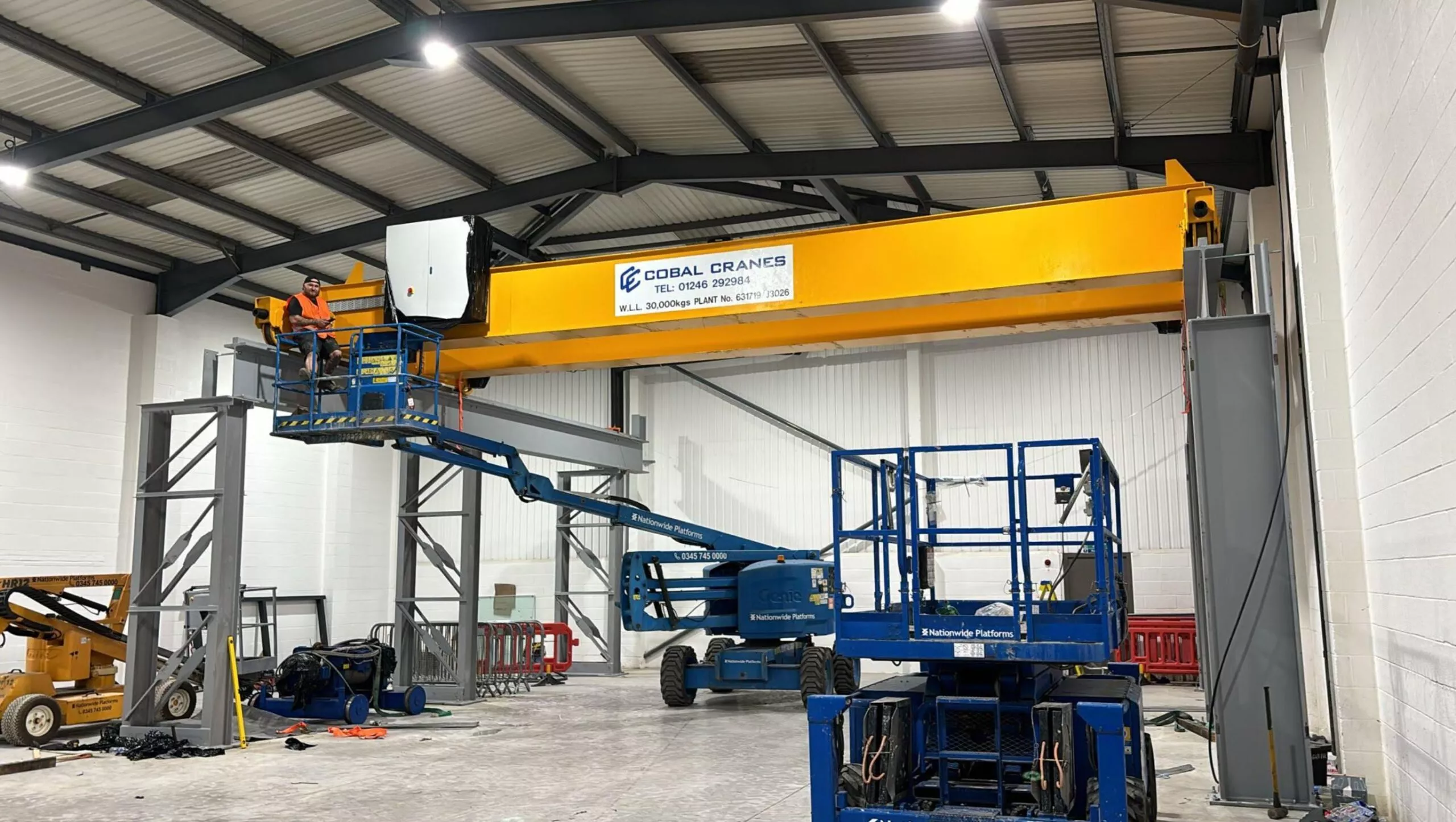
Bridge Crane Types
Bridge cranes come in various configurations to suit different capacities and facility designs:
Single Girder: Features one main bridge beam; generally more cost-effective and used for lighter to medium-duty applications
Double Girder: Features two parallel bridge beams; offers greater capacity, stability, and often provides more lift height (hook height)
Top Running: The bridge travels on rails placed on top of the runway beams
Under Running (or Underhung): The bridge hangs from the bottom flange of the runway beams, which can maximise floor space and headroom.
Key components for bridge cranes
Runways: Parallel beams or rails, typically mounted to the building structure, on which the bridge travels along the length of the work area.
Bridge: The main horizontal beam(s) spanning the width of the work area. It connects the two runways and supports the trolley and hoist.
End Trucks: Located on either side of the bridge, these contain wheels that allow the bridge to travel along the runways.
Trolley: A mechanism that rides along the bridge and carries the hoist, providing lateral (side-to-side) movement.
Hoist: The lifting unit that uses a chain or wire rope to raise and lower the load.


